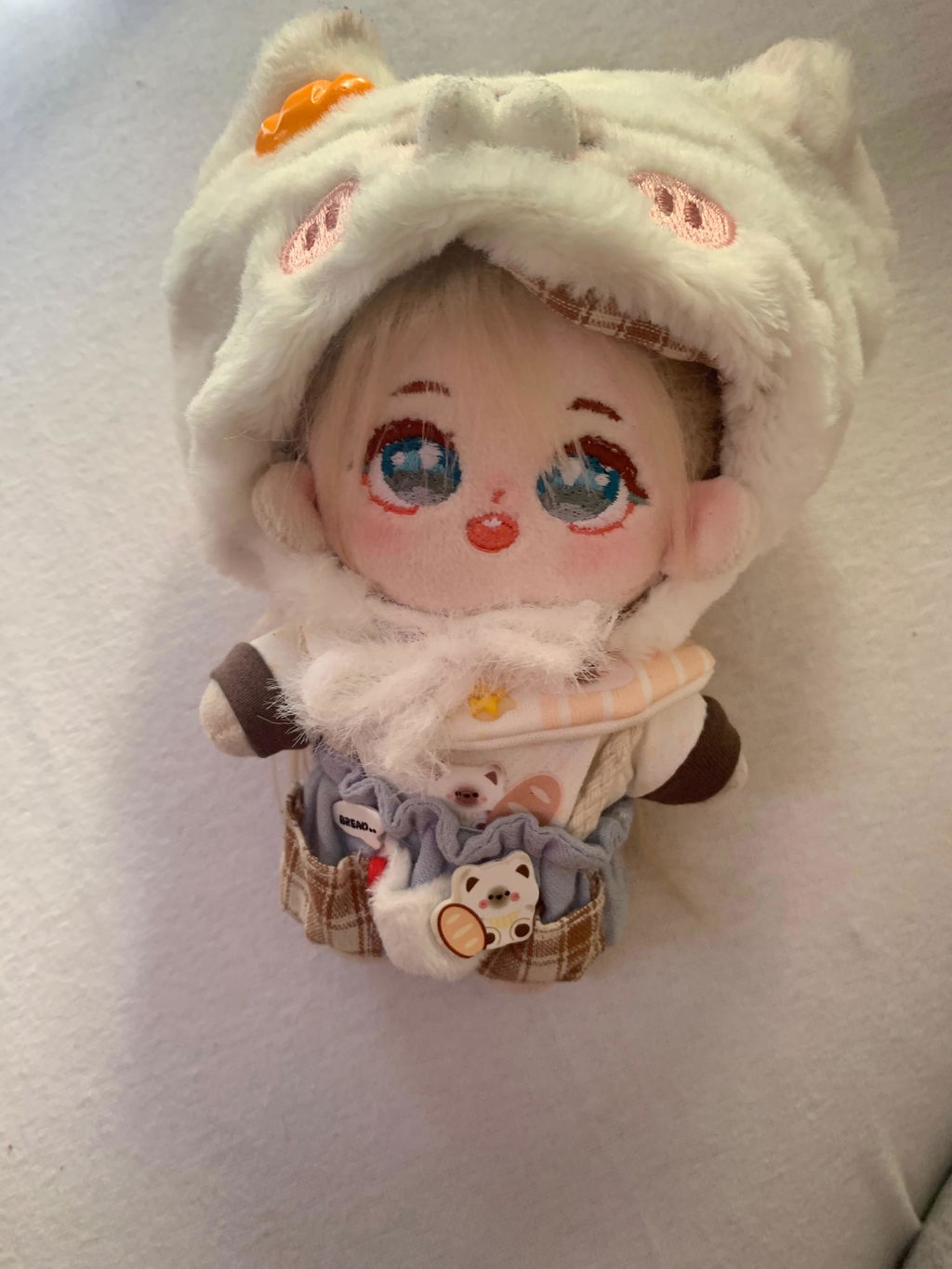
One of the most common questions from first-time doll makers is: which fabric do I need? If you have been browsing doll-making materials, you have probably come across two distinct types of plush fabric — a very short, smooth one marketed as "skin fabric" and a longer, fluffier one used for hair and fur. They look similar in photos but behave very differently in practice.
This guide explains exactly what each fabric is, what it is best suited for, and how to choose the right size and color for your project — using the three core plush fabrics available at niannyyhouse as a reference.
The Two Types of Plush Doll Fabric
Plush fabrics used in doll making are defined primarily by their pile height — how long the fibers stand above the base fabric. For doll making, two pile heights cover almost every use case:
- 1mm pile (ultra-short) — doll skin fabric: The pile is so short the surface feels velvety and smooth, almost like suede. This is the standard choice for doll bodies, limbs, face panels, and anything that should look like skin.
- 5mm pile — doll hair fabric: The fibers are clearly visible and soft to the touch. This length mimics the texture of short animal fur or styled doll hair, and is the go-to for wigs, animal ears, tails, fur accents, and fluffy decorative areas.
Using the wrong pile height for a part of your doll is one of the most common beginner mistakes — a 5mm pile on a doll's face looks like a beard rather than smooth skin, while 1mm pile on a wig looks flat and wig-like rather than full and natural.
1mm Doll Skin Fabric – The Foundation of Every Handmade Doll
The niannyyhouse 1mm doll skin fabric (20×20 in / 50×50 cm) and its larger 20×63 in / 50×160 cm format are both made from ultra-short 1mm pile plush. The result is a fabric that looks and feels smooth — closer to velvet than to a fluffy toy — which is exactly what you want for realistic doll skin.
What It Is Used For
- Doll body construction (torso, limbs, head base)
- Face panels and cheek areas
- Stuffed animal body covering
- Smooth doll accessories such as bags or shoes
- Any area that represents bare skin or a clean fabric surface
Color Range
The small-format (50×50 cm) version offers 40+ colors including a comprehensive range of skin tones — Light Flesh (White), Light Flesh (Pink), Flesh (Yellow), Dark Flesh, Peach Pink, Beige, Off-white — plus neutrals and fashion colors. The large-format (50×160 cm) version focuses on the most-used skin tones and neutrals in 17+ colors, covering everything needed for full doll body production.
Choosing the Right Size Format
The two size formats serve different project scales:
- 50×50 cm (20×20 in) — $7.90 per piece: Best for smaller dolls, individual limbs, face panels, or when you want to test a new color without committing to a large piece. The flexible quantity system lets you buy multiple pieces of the same color — each additional piece adds 50 cm to the length while keeping the 50 cm width fixed. Two pieces = 100×50 cm, three pieces = 150×50 cm, and so on.
- 50×160 cm (20×63 in) — $10.50 per piece: The large format provides enough fabric to complete a full doll body — head, torso, and limbs — in a single piece, which means fewer seams and a more consistent texture across the finished doll. It delivers better value per square centimeter and is the practical choice for larger projects or batch production.
5mm Plush Hair Fabric – For Wigs, Fur, and Fluffy Accents
The niannyyhouse 5mm plush doll hair fabric (20×20 in / 50×50 cm) has a noticeably longer pile than the skin fabric, giving it a soft, fluffy texture that reads visually as hair or fur. At $8.90 per piece with 35 colors available, it is the standard choice whenever your doll needs textural contrast.
What It Is Used For
- Doll wigs and hair coverings (cut and shaped to style)
- Animal ears — the 5mm pile gives a natural, soft ear appearance
- Tails and fur accents on plush animals
- Fluffy collars, cuffs, or decorative trim on doll clothes
- Body covering on animals where fur texture is expected (bears, rabbits, cats)
- Decorative cushions and craft projects requiring texture
Color Range and Buying Tips
The 35 available colors span realistic hair tones (Black, Dark Brown, Caramel, Camel, Beige, White, Gray) through fashion colors (six shades of Pink, three of Blue, four of Green, multiple Cyan and Orange tones). For doll hair, the most commonly used colors are Black, Dark Brown, Caramel, and the Pink range — these cover the vast majority of doll hair styles from natural to fantasy.
The same flexible quantity system applies: each additional piece adds 50 cm to the length. If you need a long, flowing wig that requires more than 50 cm of fabric, simply order two pieces of the same color and they will be joined together.
Comparing the Three Products Side by Side
| Product | Pile Height | Size per Piece | Colors | Price | Best For |
|---|---|---|---|---|---|
| 1mm Skin Fabric – Small | 1mm (smooth) | 50×50 cm | 40+ | $7.90 | Doll skin, face, limbs; color testing |
| 1mm Skin Fabric – Large | 1mm (smooth) | 50×160 cm | 17+ | $10.50 | Full doll body; large projects; batch production |
| 5mm Hair Fabric | 5mm (fluffy) | 50×50 cm | 35 | $8.90 | Wigs, ears, tails, fur accents |
How to Choose for Your Specific Project
Use the following as a quick decision guide:
- Making a humanoid or character doll from scratch? You need both: 1mm skin fabric for the body and face, 5mm hair fabric for the wig. Start with the large-format skin fabric for the body so you have enough fabric without joining pieces mid-torso.
- Making a plush animal? If the animal is meant to look like short-furred or smooth-skinned (a seal, a pig, a cartoon bear), use 1mm skin fabric throughout. For animals with visibly fluffy fur (a bunny, a cat, a fluffy dog), use 5mm hair fabric for the main body or at least the key fur areas.
- Adding hair to an existing doll? The 5mm hair fabric in a 50×50 cm piece gives you enough material to create and style a full wig for most doll sizes. Choose a color that matches the doll's intended look, then cut, layer, and glue or sew into shape.
- Unsure about a color? Order the small-format (50×50 cm) skin fabric first to test the exact shade against your doll before committing to the large piece.
Working With Plush Fabric – Practical Tips
Plush fabric behaves differently from woven cotton or felt, and a few simple techniques make the process much smoother:
- Cut with the pile in mind: Always cut plush fabrics from the back (base side) with small sharp scissors. This prevents accidentally cutting through the pile fibers and gives you a cleaner edge.
- Follow the pile direction: Run your hand across the fabric — the pile naturally leans one way. Keep this direction consistent across all pieces of the same part so the finished doll looks uniform rather than patchy.
- Use a lint roller after cutting: Cutting plush generates loose fibers. A quick pass with a lint roller keeps your workspace and finished doll clean.
- Sew with a stretch stitch or small straight stitch: Plush fabric has a small amount of stretch. A slight zigzag or stretch stitch prevents seams from popping when the finished doll is stuffed firmly.
- Stuff firmly but evenly: Plush fabric looks best when stuffed to a consistent firmness. Uneven stuffing creates lumps that show through the short pile of skin fabric.
Frequently Asked Questions
Can I use skin fabric and hair fabric from niannyyhouse together in the same doll?
Yes, and this is the recommended approach for humanoid dolls. Use the 1mm skin fabric for the body, face, and limbs, and the 5mm hair fabric for the wig and any fluffy accents. The two pile heights create a natural visual contrast between skin areas and hair areas.
How much fabric do I need for a complete doll body?
For a standard 30–40 cm humanoid doll body, one piece of the large-format 50×160 cm skin fabric is generally enough for the full body including head, torso, arms, and legs. For smaller dolls (15–20 cm), one or two pieces of the 50×50 cm format is usually sufficient.
What is the difference between the skin fabric color options — Light Flesh (White) vs. Light Flesh (Pink)?
Both are light skin tones, but Light Flesh (White) has a cooler, more neutral undertone while Light Flesh (Pink) has a warmer, rosy undertone. Light Flesh (Pink) tends to look more lifelike for character dolls under warm lighting, while Light Flesh (White) is better for very pale or fantasy characters.
Can the 5mm hair fabric be heat-styled?
The fabric is acrylic-based. Low-heat styling with a warm tool is possible for light shaping, but high heat will melt or damage the fibers. For structured hair shapes, cutting and layering the fabric to shape is safer than heat-styling.
Where to Find These Fabrics
All three fabrics are available at niannyyhouse with free standard shipping on all orders and a 14-day return policy:
- 1mm Doll Skin Fabric – 50×50 cm, 40+ colors ($7.90)
- 1mm Doll Skin Fabric – 50×160 cm, 17+ colors ($10.50)
- 5mm Plush Hair Fabric – 50×50 cm, 35 colors ($8.90)
Whether you are making your first doll or scaling up to batch production, having the right pile height for each part of the doll makes a visible difference in the finished result. Start with the skin fabric for the body, add the hair fabric for texture and character, and explore the color ranges to bring your doll's design to life.